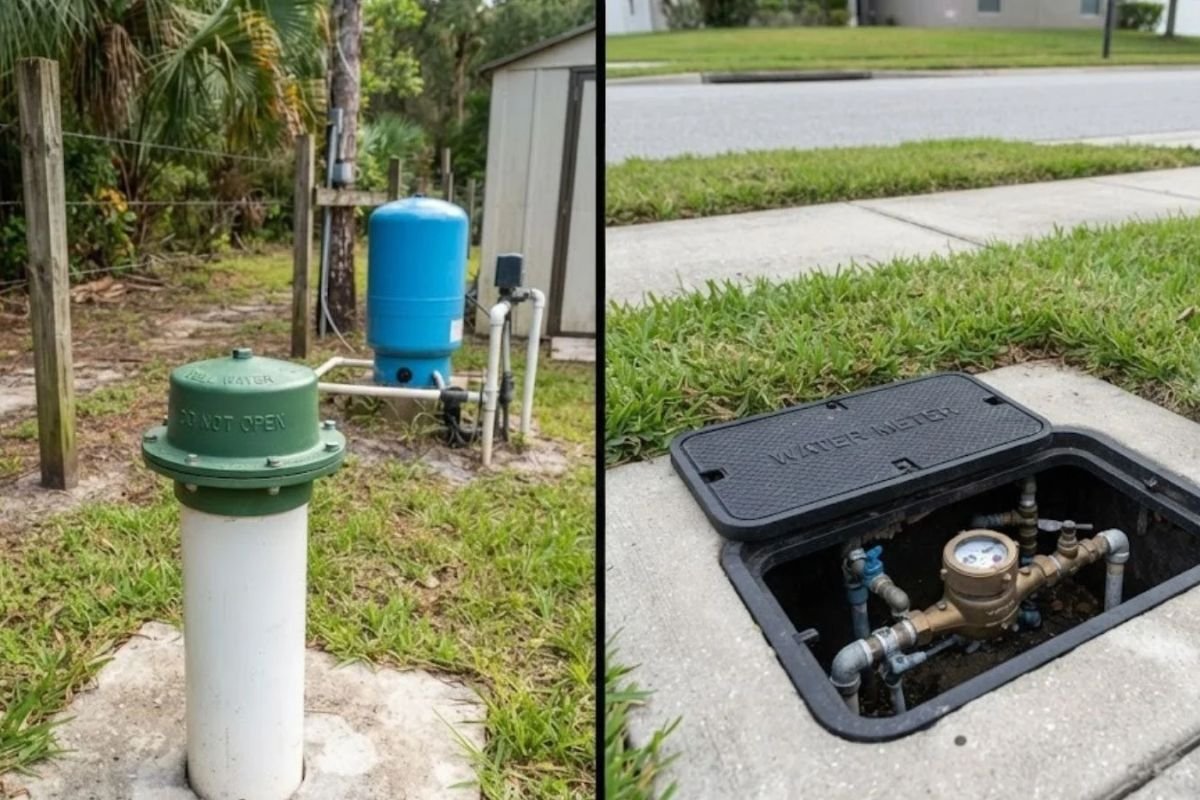
Where Each System Is Common In Collier County
Naples proper and most of the incorporated areas run on municipal water and sewer. Unincorporated areas like Golden Gate Estates, and rural pockets around Immokalee, are much more likely to rely on private wells and septic systems instead. Some communities, like Ave Maria, were built from the ground up with their own dedicated public utility infrastructure despite being newer developments outside city limits.
Marco Island sits in its own category, fully on municipal water despite its barrier-island location, though the surrounding salt air affects plumbing there in a different way entirely, largely through accelerated corrosion of exposed metal fittings rather than anything related to the water source itself.
Why Well Water Tends To Be Harder
Private well water in this part of Florida often carries more dissolved minerals, calcium and magnesium in particular, than treated municipal water. That harder water shows up as faster scale buildup inside pipes and on fixtures, and it shortens a water heater's effective life since scale insulates the heating element and makes it work harder than it should.
A water softener is a genuinely worthwhile investment for most well-water households here, though the right system size depends on your specific water's hardness level, not just a general assumption based on the neighborhood.
What Each System Requires That The Other Doesn't
A well system adds its own maintenance layer that city water customers never think about: the well pump itself, a pressure tank, and periodic water testing to catch bacterial contamination or mineral content changes early. Municipal water customers don't manage any of that, but they're also not in control of water quality upstream of their meter, and city water can still vary somewhat in hardness and mineral content depending on the treatment plant and time of year.
Municipal customers do have their own recurring consideration though, mainly around fixtures and water heaters aging out over time the same as anywhere, just without the added mineral-scale acceleration well households often see.
Practical Takeaways For Either Situation
If you're on a well, testing your water periodically and considering a softener if you haven't already are the two highest-value steps you can take. If you're on city water and just haven't thought about water hardness, it's still worth checking, since even treated municipal water varies enough that a softener sometimes makes sense depending on your specific area and how your fixtures are holding up.
What Happens When A Property Changes Systems
Occasionally a property near a growing service boundary gets the option to connect to municipal water where it previously relied on a well, or a new development area gets its own dedicated utility built out where wells were once standard.
That transition involves permitting, a connection fee, and typically capping or properly abandoning the old well per Florida regulations rather than leaving it in place unused. It's not something most homeowners do casually, but it does come up, particularly as some of Collier County's unincorporated areas see infrastructure expand over time.
Why It Helps To Work With Someone Who Handles Both
A lot of plumbing outfits specialize heavily in one system type or the other, which can be a real gap if you're not sure which category your issue falls into, or if you're considering a transition between the two.
We work on both regularly across Collier County, from well pump repairs out in the Estates to standard municipal fixture work closer to Naples proper, which means the diagnosis you get accounts for your actual system rather than defaulting to whichever one a given technician is more familiar with.
That range matters most when a problem doesn't fit neatly into one category, low pressure that could be a well pump issue or a supply line issue, for instance, since ruling one cause in or out quickly saves you from paying for a diagnosis twice.
The Short Version, Side By Side
City water customers get consistent treated water and no on-property equipment to maintain beyond fixtures and the water heater, but no control over upstream water quality or pressure decisions made by the utility.
Well owners take on their own pump, pressure tank, and periodic testing responsibilities, but gain independence from municipal rate increases and outages, along with generally harder water that benefits from a softener. Neither setup is objectively better, they're just different tradeoffs, and knowing which one applies to your home is the first step toward maintaining it well.
Hardness And Treatment In City And County Water
The City of Naples 2024 Water Quality Report says its supply is drawn from the Lower Tamiami Aquifer through 51 wells and treated with lime softening, filtration, and disinfection. It lists hardness at 58 to 102 milligrams per liter, averaging 67, which it calls moderately hard, or about 3.9 grains per gallon on average. The report data table lists chloramines as the disinfectant.
Collier County's 2024 report for unincorporated areas lists similar figures, with hardness from 42 to 94 milligrams per liter and an average of 67, also described as moderately hard. It says the county adds a corrosion inhibitor and uses chloramines.
Well water has no utility report behind it. The Florida Department of Health recommends testing a private well for bacteria and nitrate at least once per year, and the owner is responsible for the water. We serve well homes in Golden Gate Estates and Immokalee and city water homes in Naples.
Safety Checklist
- If you suspect your well was flooded, use bottled water for drinking until it has been tested.
- Test a private well for bacteria and nitrate at least once a year, as the Florida Department of Health recommends.
- Flush taps after water has sat for hours.
Sources and guidelines: City of Naples 2024 Water Quality Report, Collier County 2024 Water Quality Report, Florida Department of Health private well guidance.
Well & City Water FAQ
How do I know if my home is on a well or city water?
If you have a monthly water bill from the city or county utility, you're on municipal water. If you don't, and you have a visible well cap or pressure tank on the property, you're on a private well.
How often should well water be tested?
Annual testing is a reasonable baseline for bacterial and basic quality checks, with more frequent testing if you notice a change in taste, smell, or color, or after any nearby flooding or construction.
Does a water softener work the same way for well water and city water?
The equipment works the same way, but the right size and settings depend on your water's actual hardness level, which is usually higher for well water in this area.
Can hard well water actually damage plumbing fixtures over time?
Yes, ongoing scale buildup can reduce flow, shorten fixture lifespan, and increase the frequency of repairs, which is part of why addressing hardness proactively tends to save money over the years rather than just being a comfort upgrade.
How hard is Naples city water?
The City of Naples 2024 Water Quality Report lists an average hardness of 67 milligrams per liter, or about 3.9 grains per gallon, and calls it moderately hard. Collier County's 2024 report gives the same average of 67 for its system. Test your own tap, since readings vary.
Not Sure What's Causing Scale Buildup Or Water Quality Issues?
If hardness is an issue in your home, our water softener installation service can size the right system for your specific water. Well owners dealing with pressure or supply issues can see our well pump repair service, and anyone concerned about water purity can look at our water filtration installation service.